Relationship Governance for Co-Founders
Build a stronger way of working before growth, pressure, or changing circumstances expose the cracks
Relationship Governance helps co-founders create clear, practical agreements about roles, decisions, communication, contribution, and review points, before frustration turns into conflict and conflict starts damaging the business.
No one trained you to be a Cofounder…
And most of it begins long before the visible fallout. Misalignment, unclear roles, changing contribution, and unspoken expectations can quietly erode trust and decision-making over time.
What relationship governance means in practice
Relationship Governance is the practical framework that sits between a shareholder agreement and the day-to-day reality of running a business together. It covers the working agreements that are often left unspoken: who owns which decisions, how disagreement is handled, how contribution is reviewed, how pressure is discussed, and when the arrangement gets revisited as the business evolves.
A legal agreement matters, but it will not tell you how to handle recurring tension, shifting effort, changing ambition, or a difficult strategic disagreement. Relationship Governance fills that gap.
Working on your shared relationship is like taking vitamins to keep your long-term relationship healthy.
Why co-founders need it
Most co-founder problems do not begin with a dramatic fallout.
They build slowly:
- One person starts carrying more of the operational load.
- The business becomes more complex, but decisions are still made informally.
- Growth, funding, or a new opportunity is changing the level of risk.
- Roles, reward, or availability no longer feel aligned.
- A friendship or family dynamic makes honest feedback harder.
- You’re no longer talking from the same page
When these changes are not discussed, co-founders can end up arguing about the surface issue while avoiding the real one. I call these decoy debates: recurring disputes about tasks, meetings, pricing or communication that are often masking deeper questions about trust, contribution, control or the future.
When this is the right starting point
Relationship Governance is designed for co-founders who are broadly committed to continuing together and want to strengthen the way they work before tension becomes entrenched.
- You are committed to continuing together and want a stronger way of working.
- The business is growing, changing, or becoming more complex.
- You want to reset assumptions before tension becomes entrenched.
- You value the personal relationship as well as the commercial one.
- You want practical working agreements, not just a good conversation.
- You want to avoid past founding relationship mistakes and lean on an impartial third party to facilitate the crucial conversations.
This is probably not the right starting point if:
- Communications have already broken down
- Decisions are stuck or regularly escalating into conflict
- Trust is already under significant strain.
- A separation or founder exit may be on the table.
- In those situations, start with the Co-Founder Sherpa Diagnostic or explore the Sherpa Programme.
The Four Stages
Good co-founder agreements are not one-off legal events. They need to be reviewed as the business, the workload, and the people involved change: Always Be Contracting
What you leave with
Relationship Governance for Co-Founders Investment
Many founder breakdowns do not begin with a dramatic dispute. They begin with misalignment that is left unspoken for too long.
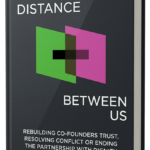
The Distance Between Us: Rebuilding Co-Founder Trust, Resolving Conflict or Ending the Partnership with Dignity
A practical guide for co-founders when the relationship is under strain.

Relationship Governance Keynotes and Workshops
Practical insight for founder communities, boards and leadership teams.
Strengthen the partnership before strain becomes expensive
If the business is changing, the way you work together may need to change too. Relationship Governance helps you update the partnership before old assumptions start creating new problems.
Losing a founding member can trigger a 45% drop in revenue and a 33% decline in productivity within the first year.