Co-Founder Sherpa Diagnostic
A private first step when something feels off
Not ready to bring your co-founder into the room? Start here. The Sherpa Diagnostic is a private, fixed-price session for founders who need clarity on conflict, misalignment, trust, roles, contribution, decision-making, or the future of the partnership
If something feels off but you are not sure what to do next, this service helps you think clearly, reduce the emotional noise and make a better first move. It is designed for the founder who wants practical support before deciding whether to involve their co-founder, reset the relationship, or prepare for a more structured next stage.
When this is the right place to start
This is the right starting point when you can see a problem forming, but are not yet ready for joint work. Sometimes that is because the other co-founder is defensive, disengaged, or unaware. Sometimes it is because you need to get clearer yourself before deciding how to raise the issue.
- You feel stuck, frustrated or uneasy, but do not yet know how serious the issue is.
- You are worried about co-founder conflict and want to avoid making things worse.
- You need help thinking through roles, contribution, trust, money, communication or founder exit questions.
- You are not ready to involve the other co-founder yet.
- You want a paid, bounded first step rather than an open-ended conversation.
The purpose is not to diagnose your co-founder or confirm that you are right. It is to help you understand what is happening, what matters most, and what a sensible next step looks like.
What we look at
Most founder concerns sit somewhere between relationship strain, business risk, and difficult decisions. The Diagnostic helps you sort through both the emotional and practical sides of what is happening so you can judge the situation more accurately.
- What has changed in the relationship.
- Where trust has weakened, if it has.
- What is happening around roles, effort, contribution and accountability.
- Which decisions are stuck or being avoided.
- Whether this is an issue of alignment, conflict, governance, burnout, resentment or possible separation.
- What you want to happen next, realistically.
What the Sherpa Diagnostic includes
- A short pre-session intake.
- A private 75-90 minute session.
- Structured reflection on the issue, the risks, and the realistic options.
- Help clarifying what to say, what not to say, and what order to do things in.
- Clear written next-step guidance after the session.
The output is designed to be useful on its own. In some cases, that means you leave with a clearer conversation plan. In others, it means deciding that the Sherpa Programme, Relationship Governance support, or legal advice is the more appropriate next step.
Why this works better than sitting with it alone
Founders often wait too long because they do not want to overreact, trigger conflict, or damage an already fragile dynamic. The problem is that silence rarely creates clarity. It usually creates more guessing, more resentment and more risk.
A private, structured first step gives you space to think without performing, defending or escalating. It helps you move from vague concern to clearer judgement, which is often what makes a better next conversation possible.
A more private starting point
Where appropriate, I may use Joze.ai to help surface themes, organise concerns, and support structured reflection before any joint work begins. The technology can support clarity, but the assessment, interpretation, and next-step guidance remain human-led. It is led by Jane, your Sherpa helping you carry the load of your journey. You can review the published Joze.ai Privacy Policy and Terms of Use before you begin.
What you leave with
What happens next
After the Diagnostic, there are usually three possible routes. You may decide you simply needed clarity and a plan for your own next conversation. You may invite your co-founder into the Sherpa Programme. Or you may conclude that the next step should involve legal, financial or governance advice instead.
- Move forward yourself, using the guidance from the session.
- Invite your co-founder into the Co-Founder Sherpa Programme.
- Move into proactive Relationship Governance work if the issue is more about structure than active conflict.
- Take the clarified position to a solicitor, accountant or other adviser where needed.
That is one reason this service works commercially. It is not a vague consultation. It is a paid first step that produces something useful and creates a clearer route into the right follow-on support.
If you need to bring in your co-founder later
One of the most useful parts of the Diagnostic is often working out how to approach the other co-founder without turning concern into accusation. If the right next step is joint work, we can shape the invitation so it feels constructive, specific and easier to accept.
Do not wait for the issue to become more expensive
You do not need to persuade your co-founder all at once. Often the first step is simply inviting them into a more structured conversation about what is no longer working and what needs attention
What this service is not
The Sherpa Diagnostic is not legal advice, tax advice, therapy or formal mediation. It is a structured private support session to help a founder assess a difficult co-founder situation, make sense of the options and take a better next step.
- Not a substitute for legal advice.
- Not a substitute for tax or financial advice.
- Not a joint mediation session.
- Not an open-ended free discovery call in disguise.
Diagnostic Investment
Founder-team disruption has measurable business consequences. One NBER working paper found that startups experiencing the exogenous loss of a founding team member saw roughly 35% lower revenue and 22% lower labour productivity relative to matched counterparts. Small problems at the top rarely stay small for long.
Frequently asked questions
Need a more self guided first step?
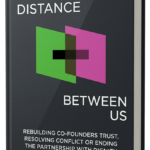
The Distance Between Us: Rebuilding Co-Founder Trust, Resolving Conflict or Ending the Partnership with Dignity
A practical guide for co-founders when the relationship is under strain.