
A silent crisis is unfolding in offices and boardrooms around the world. Daily dashboards do not show it, and quarterly reports rarely highlight it. Yet it is one of the most common reasons promising ventures collapse. Effective co-founder mediation can address that fracture before it becomes a business divorce.
It is executive misalignment, specifically the fracturing of the co-founder relationship.
When founding teams break down, it is rarely because the business model has stopped making sense. More often, the human relationship driving the business has fractured, and the founders do not know where to turn for help.
As a qualitative researcher and organisational coach, my professional mission has always been to help partners navigate these high-stakes decisions and personal friction points. For years, the traditional tools of co-founder mediation—deep dialogue, structural coaching and mediation parallels—have been the gold standard. But human-to-human mediation has inherent limitations. No matter how seasoned a practitioner is, our own experiences, cognitive biases and even our physiological states can subtly influence how we interpret a conversation.
That is why I have integrated a state-of-the-art AI-driven thought partner into my practice: Joze.ai
By blending my human coaching and research background with an objective, secure, and empathetic AI “sandbox,” I have built a framework that reduces prejudice, spots blind spots, and provides unparalleled relationship governance.
If you have ever felt a quiet drift in your business partnership, or if you want to close your co-founder alignment gap before the next stage of growth, this is why we need to talk.
The true scale and quiet trauma of co-founder conflict
The impact of co-founder misalignment is massive. Traditional legal and business paths treat partnership disputes like transactional battles. But when co-founders clash, they aren’t just fighting over cap tables or operational responsibilities—they are navigating a complex psychological journey.
The Partner Hype Cycle
In my work, I frequently reference a core diagnostic framework developed by Organizational Psychologist Dr Eyal Ronen: the Partner Hype Cycle. Every business partnership evolves through five distinct stages, starting with the euphoric “honeymoon phase,” moving through structural friction, and hopefully arriving at a mature, stable partnership.
Tension naturally rises when a business scales, raises capital, or faces a major strategic pivot. The danger arises when partners fail to recognise which stage of the cycle they are in. They misinterpret natural organisational evolution as personal betrayal.
The danger of decoy debates
When communication begins to fail, co-founders rarely fight about the actual core issue. Instead, they enter what I call Decoy Debates.
A Decoy Debate occurs when a founding team secretly avoids the real, underlying conflict—such as a lack of trust, a power imbalance, or divergent personal goals—by arguing exhaustively over trivial operational details. They might spend hours fighting about a marketing campaign, a minor software feature, or a hiring decision, when the real battle is about who holds the power and where the business is headed.
The financial and emotional toll
When these unresolved tensions escalate, the traditional legal alternative is catastrophic. It leads to what is known as pretextual battles—where history is rewritten, diaries are subpoenaed, and private thoughts are laid bare before a court. As I captured in my work, a single word like “pretextual” can turn into a $250 million legal battle. The day your private diary goes to court is the day strangers take control of your business, reputation and retirement savings, as Musk and Altmat found out.
But the true cost isn’t just financial. It is emotional. Traditional, adversarial legal paths result in “multi-generational trauma” for families and partners. It breeds what conflict researchers call conflict entrepreneurs—individuals and adversarial legal architects who prey on people’s grievances for their own gain, dragging out disputes to billing increments while destroying the very relationships they are paid to resolve.
We must protect ourselves and our businesses from this path.
Co-founder mediation with AI: Privacy, security and “sandbox honesty”
When I first tell clients that we will be using an artificial intelligence tool as part of our alignment and conflict resolution process, the reaction is often one of hesitation.
“Isn’t AI cold and robotic?” “Why can’t we just use ChatGPT?” “Is our highly sensitive business data safe?”
These are valid, critical reservations. But the platform I use, Joze.ai, is fundamentally different from any public AI model you have encountered.
Why we don’t use ChatGPT
Public AI systems like ChatGPT or Claude are designed for general assistance, and entering private corporate data into them is highly dangerous. Providers may use that information to train future models, potentially placing it beyond your control.
Furthermore, public LLMs are “determinative”—they try to give you “the answer” or tell you what to do. In partnership alignment, there is no single “correct” answer; there is only the agreement that works for both of you.
Rock-solid privacy protocols
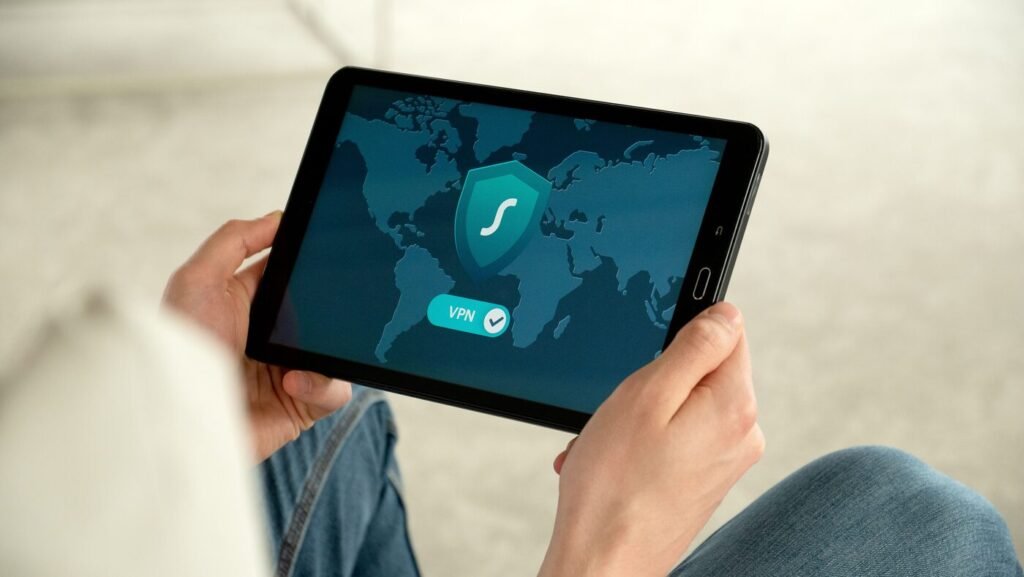
The Joze.ai team built the platform from the ground up with security as its absolute priority. The platform uses two fundamental protocols to protect your business:
- PII Obfuscation: Before any statement, financial figure, or text is processed, the system completely obfuscates all Personally Identifiable Information (PII). The system replaces your names, specific product details and company identifiers with secure placeholders.
- Closed-Loop LLMs: The system only interacts with enterprise-level, closed-loop language models. The system never saves or stores your data and never uses it to train AI models.
The asynchronous sandbox
One of the most powerful features of this system is that it serves as an asynchronous sandbox. Traditional co-founder mediation often places partners in the “hot seat” across from each other in a boardroom. Under that face-to-face pressure, power imbalances dominate. The louder partner overrides the quieter one, and fear of immediate confrontation causes people to hold back their true feelings.
With this AI thought partner, the entire initial intake is asynchronous. You log in on your own time. You can think about a question, go for a jog, sleep on it, and respond when you are calm.
Empathy in the machine
Surprisingly, the system is remarkably empathetic. Unlike standard software, the AI identifies your sentiment and “vibes” off of your communication style. If you are sharing deeply personal, complex feelings, the system responds with structured, validating empathy: “Oh, that must be incredibly frustrating. How did that make you feel? Tell me more about that.” If you are a concise, action-oriented thinker, the system adapts, keeping its questions short and specific.

Confidential sandboxing
During this asynchronous intake, the system provides a Confidential Box. If there are highly sensitive elements you are hesitant to state openly—such as being personally cash-strapped, feeling burnt out, or wanting to plan an exit—you can type them into this secure area.
The system keeps this information completely sandboxed. Your co-founder will never see it. However, the AI uses this data behind the scenes to generate creative settlement and alignment options, and I, as your coach and mediator, can see it to guide you both toward options that address these hidden realities.
The credentials of Joze.ai: Designed by professionals, built for peace
To trust a technology with your business, you must trust the minds behind it. Joze.ai is not an anonymous, speculative Silicon Valley project. In Hebrew, Joze means “vision and mission” or “vision and agreement” and the founders are on a mission to solve conflict for humanity. Specialists in conflict, law and user experience built this highly specialised platform.
The leadership team behind the platform
- Mark Stiles (Co-Founder & CEO): Mark practised law for thirty years right outside of Boston. He devoted his entire legal career to proactive dispute resolution, planning and mediation, building a firm around keeping clients out of court. He exited his law practice completely to build Joze.ai because he realised he could scale his proactive, peace-building mission from hundreds of people to millions.
- Barak Cohen (Co-Founder & Agreement Architect): Barak is a veteran Microsoft product designer who shipped the original SharePoint Online (now Microsoft 365). He brought his decades of expertise in corporate collaborative software to design a seamless, intuitive user experience.
- Alex (Lead AI Architect): Alex is one of the premier AI architects in the industry today, ensuring that the technology driving the system is robust, safe, and state-of-the-art.
Key technological breakthroughs
The National Center for Technology and Dispute Resolution (NCTDR) website lists Joze.ai, demonstrating its alignment with international online dispute resolution (ODR) standards. The platform boasts two unique, game-changing features:
- Patent-Pending Sentiment Analysis: As you and your partner complete the onboarding interviews, the platform calculates a real-time percentage of agreement (e.g., “You are 62% in agreement”). This percentage is visible to both parties. Psychologically, this is incredibly powerful. When partners believe they are at an absolute impasse, seeing a concrete metric showing they actually agree on 62% of their core principles instantly lowers defences and encourages them to bridge the remaining gap.
- Breakthrough Multilingual Support: In our globalised economy, business partners often come from different cultural and linguistic backgrounds. This is the first platform of its kind to support seamless bilingual and multilingual shuttle alignment. One partner can interact with the platform entirely in Spanish, while the other interacts entirely in English. The AI handles the translation, sentiment tracking, and shuttle alignment natively, removing language barriers that frequently exacerbate executive friction.
Why co-founder mediation still needs a human Sherpa
If this AI tool is so powerful, why can’t you and your co-founder just use it on your own?
This is the core of the Sherpa Model.
In the high-altitude mountains of the Himalayas, a Sherpa is a local expert who guides climbers up treacherous terrain. A Sherpa doesn’t climb the mountain for you, nor do they carry you up. But they know where the hidden crevasses are, they understand how to read the weather, they carry the heavy administrative pack, and they keep you safe when oxygen is low and panic sets in.
In our work, Joze.ai is the technology, but I am your Sherpa.
I’ll help you have a bold vision and solve conflict, and help partners reach a lasting, healthy agreement to move forward. – Even when co-founders are in deep conflict, they can reconnect with their original vision and find common ground.
The limits of unguided AI
When co-founders attempt to use AI tools on their own, several critical issues arise:
- AI is not determinative: The platform is an idea and option generator. It does not hand down binding decisions or legal advice.
- Power Imbalances Still Exist: If one partner is naturally more dominant or possesses greater strategic leverage, they can easily warp the outcome of an unguided process.
- Translation of Insights: The AI will generate a beautiful “common summary” and list potential settlement options. But it takes a human expert to translate those data points into real-world business decisions.
My background: qualitative researcher meets organisational coach with a soft spot for Co-Founders
My background as a qualitative researcher and organisational coach is what makes this approach to co-founder mediation so powerful.
In qualitative research, our primary skill is “going deep beyond the surface.” We don’t just look at quantitative metrics; we analyse human behaviour, language, underlying motives, and emotional undercurrents. When the AI gathers your initial statements and sandboxed thoughts, I analyse those outputs with a researcher’s lens—spotting the subtle tensions, the unstated fears, and the behavioural patterns that a computer might categorise but cannot feel.
As an co-founder coach, I understand leadership systems, operational governance, and the practical realities of scaling a company. I have walked in parallel with mediators, legal architects, boardroom chairs and coaches, and I know that coming to a theoretical agreement is only half the battle. You have to operationalise that agreement.
As your Sherpa, I use the AI as a “super assistant” or “co-mediator.” It handles the administrative heavy lifting—the exhausting onboarding questionnaires, the scheduling of initial sessions, and the technical summarising. This eliminates the “homework friction” that often stalls conflict resolution before it even begins.
Once the AI has mapped the common ground, I step in. I guide you through the shuttle diplomacy, navigate the power imbalances, and help you “push the ball over the end zone” into a lasting, human agreement.
Co-founder mediation for alignment and deeper governance
Our alignment framework is highly flexible, designed to meet your business exactly where it is today. We categorise our work into two main pathways: preventative alignment (“vitamins”) and reactive conflict resolution (“medicine”).

Pathway A: Preventative relationship governance (The Vitamin Path)
Mark Stiles and Barak Cohen often debate a classic entrepreneurial concept: “It is easier to sell medicine than vitamins.” When you are in intense pain, you will pay anything for medicine. But vitamins are what actually keep you alive.
I advocate for a philosophy I call Always Be Contracting (ABC)—a structured approach to relationship governance.
A business partnership is not a static legal document signed on day one and locked in a drawer. What you agreed to five years ago is rarely what your business needs today, and it is certainly not what you will want tomorrow. People change, risk appetites shift, and roles naturally drift.
Once a year, we use this system as a standalone alignment check. We run your leadership team through the asynchronous sandbox, mapping your expectations, decision-making rights, and strategic visions. It serves as an executive health check, ensuring you catch minor alignment gaps before they turn into full-blown crises.
Pathway B: Deeper structural transformation (The Medicine Path)
If your partnership has already hit a wall, we use the platform as a foundation for deep, transformative work.
If you are experiencing severe friction, a major deadlock, or are preparing for a critical strategic transition—such as raising a venture round, restructuring equity, navigating an investor exit, or executing a business divorce—the platform’s output serves as our baseline.
Once we have used the AI sandbox to establish your core area of agreement (whether that is 50%, 70%, or 90%), I design a customised human coaching program. We build:
- Founder Role & Energy Maps: Redesigning who does what based on where you add the most value and operational energy.
- Decision Charters for Big Calls: Documenting exactly who has veto power, what success looks like, and how you will handle future stalemates without stalling the business.
- Board & Investor Expectation Resets: Aligning your internal founder dynamics with external stakeholders to protect your cap table.
Your next step: The 15-minute clarity call
You didn’t build your business to let executive misalignment tear it down. Whether you face high-stakes friction and need immediate “medicine”, or lead a healthy founding team looking to install robust relationship governance through “vitamins”, the Sherpa Model protects your vision, culture and peace of mind.
You don’t have to climb this mountain alone, and you don’t have to step into an adversarial boardroom to start the conversation.
Let’s start with a low-pressure, completely confidential exploratory conversation.
Book a 15-Minute Clarity Call Today
In just fifteen minutes, we’ll discuss where your partnership currently stands, explore how co-founder mediation and the asynchronous AI sandbox can fit your team, and outline a path to keep your leadership aligned, healthy and focused on what you do best: growing your business.